Pray.com is a Christian social networking service and mobile application designed to facilitate religious communities. Launched in 2016, it was founded by Steve Gatena, Michael Lynn, Ryan Beck and Matthew Potter. The platform offers features for social networking, daily prayers, sermons, biblical content, and podcasts. The COVID-19 pandemic significantly increased Pray.com's user base, with downloads surging by 955%. During this period, the platform collaborated with churches to support virtual ministry services as in-person gatherings were restricted. The Federal Election Commission issued an opinion in 2021 that allows the platform to feature members of the United States Congress. Pray.com serves as a specialized social media platform for religious groups. Congregations can establish their own groups where members and leaders can participate in discussions, livestream services, and manage donations. Additionally, users can join "prayer communities" to post and respond to prayer requests. For those who subscribe to premium services, the platform provides access to biblically-inspired meditations and bedtime stories, and Bible stories for children. Pray.com also produces Radio drama-style productions with notable actors such as Kristen Bell and Blair Underwood narrating biblical stories. == History == === Funding and development === Pray.com has secured significant funding to support its development and growth. In 2017, the platform raised $2 million in seed funding from Science Inc., Greylock Partners, and Spark Capital. This was followed by a Series A funding round in March 2018, in which the company secured an additional $14 million from TPG Growth, Science Inc., and Greylock Partners. Founder Steve Gatena has highlighted difficulties in securing funding, noting some venture capitalists' negative attitudes towards faith-based technology. === Clinical studies === There have been clinical studies on Pray.com. In one study, the app was found to be acceptable and easy to use among racial and ethnic minority groups, with participants reporting improved mental health and well-being. Greater app use was associated with better outcomes, though low and variable usage suggests the need for further research to fully understand its impact. Another study examined Pray.com's impact on mental health by assigning 192 participants to use the app freely, use its meditative prayer function, or not use it at all. Over two months, participants reported overall improvements in mental health and well-being. Although no significant differences were found between groups, greater app usage correlated with better mental health outcomes. This suggests that religiously based mobile apps may help improve mental health and well-being. Another study of pray.com had similar findings. === National Day of Prayer === Pray first hosted a National Day of Prayer event in 2020 when it streamed to nearly one million viewers on Facebook. In 2021, Pray hosted a virtual event for the National Day of Prayer in the United States. The event featured remarks from public figures including United States President Joe Biden and former Vice President Mike Pence. President Biden spoke of his faith and prayed for an end to the COVID-19 pandemic. Biden remarked: "It means the world to me to know that there are people across the country who include Jill and me in their prayers. And I hope you know that you and your families are in our prayers as well. Today I am praying for the end of this great COVID crisis." The event featured musical performances from Gary Valenciano, Brooke Ligertwood from the Christian band Hillsong Worship, Lecrae, Heather Headley and Michael Neale. Other notable speakers included Ronnie Floyd, Ed Young, Mark Driscoll, and Samuel Rodriguez. Pray.com partnered with Sirius XM, DirecTV and Facebook to stream the event across multiple platforms. Pray.com was featured as a pop-up channel on Sirius XM, channel 154, to host the prayer event and celebrate people of all faith. === Partnerships and sponsorships === In 2024, Pray.com partnered with Sting Ray Robb as the primary sponsor for his No. 41 Chevrolet in the 2024 NTT IndyCar Series. The partnership, highlighting Robb's Christian faith, aims to engage younger audiences with faith-based content. The car, featuring Pray.com's branding, was set to debut at the Firestone Grand Prix of St. Petersburg. A partnership with Palantir Technologies for use of its AI systems was also announced in 2024. === Censorship in China === The app was removed from Apple's App Store in China as part of the country's broader efforts to restrict access to religious content. The app was targeted due to China's stringent regulations on religious material, particularly content distributed through digital platforms. The removal aligns with China's ongoing campaign to control online religious expression and maintain state-approved religious activities.
Artificial intelligence arms race
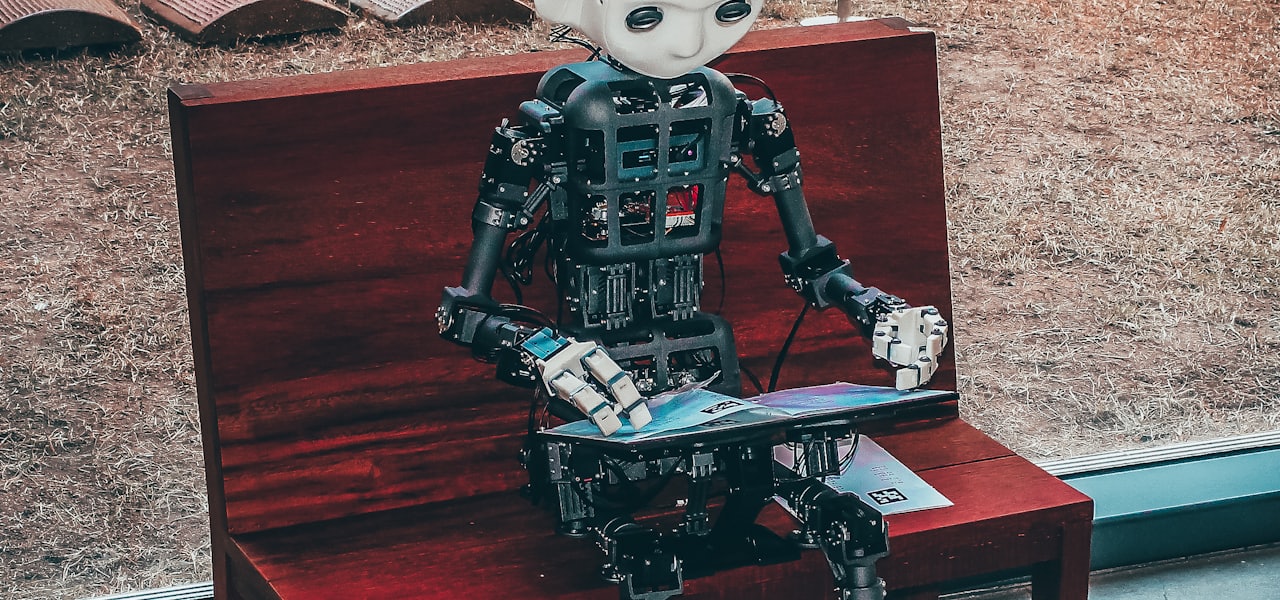
A military artificial intelligence arms race is a technological, economic, and military competition between two or more states to develop and deploy advanced AI technologies and lethal autonomous weapons systems (LAWS). The goal is to gain a strategic or tactical advantage over rivals, similar to previous arms races involving nuclear or conventional military technologies. Since the mid-2010s, many analysts have noted the emergence of such an arms race between superpowers for better AI technology and military AI, driven by increasing geopolitical and military tensions. An AI arms race is sometimes placed in the context of an AI Cold War between the United States and China. Several influential figures and publications have emphasized that whoever develops artificial general intelligence (AGI) first could dominate global affairs in the 21st century. Russian President Vladimir Putin stated that the leader in AI will "rule the world." Researchers and experts, such as Leopold Aschenbrenner and Adrian Pecotic respectively, warn that the AGI race between major powers like the U.S. and China could reshape geopolitical power. This includes AI for surveillance, autonomous weapons, decision-making systems, cyber operations, and more. == Terminology == Lethal autonomous weapons systems use artificial intelligence to identify and kill human targets without human intervention. LAWS have colloquially been called "slaughterbots" or "killer robots". Broadly, any competition for superior AI is sometimes framed as an "arms race". Advantages in military AI overlap with advantages in other sectors, as countries pursue both economic and military advantages, as per previous arms races throughout history. == History == In 2014, AI specialist Steve Omohundro warned that "An autonomous weapons arms race is already taking place". According to Siemens, worldwide military spending on robotics was US$5.1 billion in 2010 and US$7.5 billion in 2015. China became a top player in artificial intelligence research in the 2010s. According to the Financial Times, in 2016, for the first time, China published more AI research papers than the entire European Union. When restricted to number of AI papers in the top 5% of cited papers, China overtook the United States in 2016 but lagged behind the European Union. 23% of the researchers presenting at the 2017 American Association for the Advancement of Artificial Intelligence (AAAI) conference were Chinese. Eric Schmidt, the former chairman and chief executive officer of Alphabet, has predicted China will be the leading country in AI by 2025. == Risks == One risk concerns the AI race itself, whether or not the race is won by any one group. There are strong incentives for development teams to cut corners with regard to the safety of the system, increasing the risk of critical failures and unintended consequences. This is in part due to the perceived advantage of being the first to develop advanced AI technology. One team appearing to be on the brink of a breakthrough can encourage other teams to take shortcuts, ignore precautions and deploy a system that is less ready. Some argue that using "race" terminology at all in this context can exacerbate this effect. Another potential danger of an AI arms race is the possibility of losing control of the AI systems; the risk is compounded in the case of a race to artificial general intelligence, which may present an existential risk. In 2023, a United States Air Force official reportedly said that during a computer test, a simulated AI drone killed the human character operating it. The USAF later said the official had misspoken and that it never conducted such simulations. A third risk of an AI arms race is whether or not the race is actually won by one group. The concern is regarding the consolidation of power and technological advantage in the hands of one group. A US government report argued that "AI-enabled capabilities could be used to threaten critical infrastructure, amplify disinformation campaigns, and wage war":1, and that "global stability and nuclear deterrence could be undermined".:11 == By nation == === United States === In 2014, former Secretary of Defense Chuck Hagel posited the "Third Offset Strategy" that rapid advances in artificial intelligence will define the next generation of warfare. According to data science and analytics firm Govini, the U.S. Department of Defense (DoD) increased investment in artificial intelligence, big data and cloud computing from $5.6 billion in 2011 to $7.4 billion in 2016. However, the civilian NSF budget for AI saw no increase in 2017. Japan Times reported in 2018 that the United States private investment is around $70 billion per year. The November 2019 'Interim Report' of the United States' National Security Commission on Artificial Intelligence confirmed that AI is critical to US technological military superiority. The U.S. has many military AI combat programs, such as the Sea Hunter autonomous warship, which is designed to operate for extended periods at sea without a single crew member, and to even guide itself in and out of port. From 2017, a temporary US Department of Defense directive requires a human operator to be kept in the loop when it comes to the taking of human life by autonomous weapons systems. On October 31, 2019, the United States Department of Defense's Defense Innovation Board published the draft of a report recommending principles for the ethical use of artificial intelligence by the Department of Defense that would ensure a human operator would always be able to look into the 'black box' and understand the kill-chain process. However, a major concern is how the report will be implemented. The Joint Artificial Intelligence Center (JAIC) (pronounced "jake") is an American organization on exploring the usage of AI (particularly edge computing), Network of Networks, and AI-enhanced communication, for use in actual combat. It is a subdivision of the United States Armed Forces and was created in June 2018. The organization's stated objective is to "transform the US Department of Defense by accelerating the delivery and adoption of AI to achieve mission impact at scale. The goal is to use AI to solve large and complex problem sets that span multiple combat systems; then, ensure the combat Systems and Components have real-time access to ever-improving libraries of data sets and tools." In 2023, Microsoft pitched the DoD to use DALL-E models to train its battlefield management system. OpenAI, the developer of DALL-E, removed the blanket ban on military and warfare use from its usage policies in January 2024. The Biden administration imposed restrictions on the export of advanced NVIDIA chips and GPUs to China in an effort to limit China's progress in artificial intelligence and high-performance computing. The policy aimed to prevent the use of cutting-edge U.S. technology in military or surveillance applications and to maintain a strategic advantage in the global AI race. In 2025, under the second Trump administration, the United States began a broad deregulation campaign aimed at accelerating growth in sectors critical to artificial intelligence, including nuclear energy, infrastructure, and high-performance computing. The goal was to remove regulatory barriers and attract private investment to boost domestic AI capabilities. This included easing restrictions on data usage, speeding up approvals for AI-related infrastructure projects, and incentivizing innovation in cloud computing and semiconductors. Companies like NVIDIA, Oracle, and Cisco played a central role in these efforts, expanding their AI research, data center capacity, and partnerships to help position the U.S. as a global leader in AI development. ==== Project Maven ==== Project Maven is a Pentagon project involving using machine learning and engineering talent to distinguish people and objects in drone videos, apparently giving the government real-time battlefield command and control, and the ability to track, tag and spy on targets without human involvement. Initially the effort was led by Robert O. Work who was concerned about China's military use of the emerging technology. Reportedly, Pentagon development stops short of acting as an AI weapons system capable of firing on self-designated targets. The project was established in a memo by the U.S. Deputy Secretary of Defense on 26 April 2017. Also known as the Algorithmic Warfare Cross Functional Team, it is, according to Lt. Gen. of the United States Air Force Jack Shanahan in November 2017, a project "designed to be that pilot project, that pathfinder, that spark that kindles the flame front of artificial intelligence across the rest of the [Defense] Department". Its chief, U.S. Marine Corps Col. Drew Cukor, said: "People and computers will work symbiotically to increase the ability of weapon systems to detect objects." Project Maven has been noted by allies, such as Australia's Ian Langford, for the
IMPACT (computer graphics)
IMPACT (sometimes spelled Impact) is a computer graphics architecture for Silicon Graphics computer workstations. IMPACT Graphics was developed in 1995 and was available as a high-end graphics option on workstations released during the mid-1990s. IMPACT graphics gives the workstation real-time 2D and 3D graphics rendering capability similar to that of even high-end PCs made well after IMPACT's introduction. IMPACT graphics systems consist of either one or two Geometry Engines and one or two Raster Engines in various configurations. IMPACT graphics consists of five graphics subsystems: the Command Engine, Geometry Subsystem, Raster Engine, framebuffer and Display Subsystem. IMPACT Graphics can produce resolutions up to 1600 x 1200 pixels with 32-bit color and can also process unencoded NTSC and PAL analog television signals. IMPACT graphics subsystems come in three configurations for SGI Indigo2 IMPACT workstations: Solid IMPACT, High IMPACT, and Maximum IMPACT. The equivalent configurations also exist for the SGI Octane workstation but are referred to as SI, SSI, and MXI (I-series). Later Octane workstations used a similar configuration but with updated ASIC chips and are referred to as SE, SSE, and MXE (E-series). IMPACT uses Rambus RDRAM for texture memory. The IMPACT graphics architecture was superseded by SGI's VPro graphics architecture in 1997.
Hierarchical RBF
In computer graphics, hierarchical RBF is an interpolation method based on radial basis functions (RBFs). Hierarchical RBF interpolation has applications in treatment of results from a 3D scanner, terrain reconstruction, and the construction of shape models in 3D computer graphics (such as the Stanford bunny, a popular 3D model). This problem is informally named as "large scattered data point set interpolation." == Method == The steps of the interpolation method (in three dimensions) are as follows: Let the scattered points be presented as set P = { c i = ( x i , y i , z i ) | i = 1 N ⊂ R 3 } {\displaystyle \mathbf {P} =\{\mathbf {c} _{i}=(\mathbf {x} _{i},\mathbf {y} _{i},\mathbf {z} _{i})\vert _{i=1}^{N}\subset \mathbb {R} ^{3}\}} Let there exist a set of values of some function in scattered points H = { h i | i = 1 N ⊂ R } {\displaystyle \mathbf {H} =\{\mathbf {h} _{i}\vert _{i=1}^{N}\subset \mathbb {R} \}} Find a function f ( x ) {\displaystyle \mathbf {f} (\mathbf {x} )} that will meet the condition f ( x ) = 1 {\displaystyle \mathbf {f} (\mathbf {x} )=1} for points lying on the shape and f ( x ) ≠ 1 {\displaystyle \mathbf {f} (\mathbf {x} )\neq 1} for points not lying on the shape As J. C. Carr et al. showed, this function takes the form f ( x ) = ∑ i = 1 N λ i φ ( x , c i ) {\displaystyle \mathbf {f} (\mathbf {x} )=\sum _{i=1}^{N}\lambda _{i}\varphi (\mathbf {x} ,\mathbf {c} _{i})} where φ {\displaystyle \varphi } is a radial basis function and λ {\displaystyle \lambda } are the coefficients that are the solution of the following linear system of equations: [ φ ( c 1 , c 1 ) φ ( c 1 , c 2 ) . . . φ ( c 1 , c N ) φ ( c 2 , c 1 ) φ ( c 2 , c 2 ) . . . φ ( c 2 , c N ) . . . . . . . . . . . . φ ( c N , c 1 ) φ ( c N , c 2 ) . . . φ ( c N , c N ) ] ∗ [ λ 1 λ 2 . . . λ N ] = [ h 1 h 2 . . . h N ] {\displaystyle {\begin{bmatrix}\varphi (c_{1},c_{1})&\varphi (c_{1},c_{2})&...&\varphi (c_{1},c_{N})\\\varphi (c_{2},c_{1})&\varphi (c_{2},c_{2})&...&\varphi (c_{2},c_{N})\\...&...&...&...\\\varphi (c_{N},c_{1})&\varphi (c_{N},c_{2})&...&\varphi (c_{N},c_{N})\end{bmatrix}}{\begin{bmatrix}\lambda _{1}\\\lambda _{2}\\...\\\lambda _{N}\end{bmatrix}}={\begin{bmatrix}h_{1}\\h_{2}\\...\\h_{N}\end{bmatrix}}} For determination of surface, it is necessary to estimate the value of function f ( x ) {\displaystyle \mathbf {f} (\mathbf {x} )} in specific points x. A lack of such method is a considerable complication on the order of O ( n 2 ) {\displaystyle \mathbf {O} (\mathbf {n} ^{2})} to calculate RBF, solve system, and determine surface. == Other methods == Reduce interpolation centers ( O ( n 2 ) {\displaystyle \mathbf {O} (\mathbf {n} ^{2})} to calculate RBF and solve system, O ( m n ) {\displaystyle \mathbf {O} (\mathbf {m} \mathbf {n} )} to determine surface) Compactly support RBF ( O ( n log n ) {\displaystyle \mathbf {O} (\mathbf {n} \log {\mathbf {n} })} to calculate RBF, O ( n 1.2..1.5 ) {\displaystyle \mathbf {O} (\mathbf {n} ^{1.2..1.5})} to solve system, O ( m log n ) {\displaystyle \mathbf {O} (\mathbf {m} \log {\mathbf {n} })} to determine surface) FMM ( O ( n 2 ) {\displaystyle \mathbf {O} (\mathbf {n} ^{2})} to calculate RBF, O ( n log n ) {\displaystyle \mathbf {O} (\mathbf {n} \log {\mathbf {n} })} to solve system, O ( m + n log n ) {\displaystyle \mathbf {O} (\mathbf {m} +\mathbf {n} \log {\mathbf {n} })} to determine surface) == Hierarchical algorithm == A hierarchical algorithm allows for an acceleration of calculations due to decomposition of intricate problems on the great number of simple (see picture). In this case, hierarchical division of space contains points on elementary parts, and the system of small dimension solves for each. The calculation of surface in this case is taken to the hierarchical (on the basis of tree-structure) calculation of interpolant. A method for a 2D case is offered by Pouderoux J. et al. For a 3D case, a method is used in the tasks of 3D graphics by W. Qiang et al. and modified by Babkov V.
2024 National Public Data breach
In August 2024, three class-action lawsuits were filed against National Public Data along with over 14 complaints filed in federal court, claiming that the company permitted hackers to steal sensitive private information covering millions of individuals. The theft was alleged to have occurred in April 2024. One of the lawsuits specifically claims that in April, a hacker going by the moniker "USDoD" posted a notice on the dark web, offering the data for sale at the price of US$3.5 million. The information stolen is alleged to include 2.9 billion records containing full names, current and past addresses, Social Security numbers, dates of birth, and telephone numbers. The stolen data contains records for people in the US, UK, and Canada. National Public Data confirmed on August 16, 2024, there was a breach originating from someone trying to breach their systems since December 2023, with the breach occurring from April 2024 and over the next few months. The company also confirmed that 2.9 billion records were obtained, though they were still working to determine how many people were affected by the breach, and were working with law enforcement to identify the hacker. == Jerico Pictures == Jerico Pictures, Inc., doing business as National Public Data, was a data broker company that performed employee background checks. Their primary service was collecting information from public data sources, including criminal records, addresses, and employment history, and offering that information for sale. On October 2, 2024, Jerico Pictures filed for Chapter 11 bankruptcy as it currently faces over a dozen lawsuits over the breach, and is potentially liable "for credit monitoring for hundreds of millions of potentially impacted individuals." In December 2024, National Public Data shut down, showing a closure notice on its website.
Corpus of Linguistic Acceptability
Corpus of Linguistic Acceptability (CoLA) is a dataset the primary purpose of which is to serve as a benchmark for evaluating the ability of artificial neural networks, including large language models, to judge the grammatical correctness of sentences. It consists of 10,657 English sentences from published linguistics literature that were manually labeled either as grammatical or ungrammatical. == Public version == The publicly available version of CoLA contains 9,594 sentences that belong to training and development sets. It excludes 1,063 sentences reserved for a held-out test set.
Secure element
A secure element (SE) is a secure operating system (OS) in a tamper-resistant processor chip or secure component. It can protect assets (root of trust, sensitive data, keys, certificates, applications) against high-level software and hardware attacks. Applications that process this sensitive data on an SE are isolated and so operate within a controlled environment not affected by software (including possible malware) found elsewhere on the OS. The hardware and embedded software meet the requirements of the Security IC Platform Protection Profile [PP 0084] including resistance to physical tampering scenarios described within it. More than 96 billion secure elements were produced and shipped between 2010 and 2021. SEs exist in various form factors, as devices such as smart cards, UICCs, or smart microSD cards, or embedded, or integrated, as parts of larger devices. SEs are an evolution of the chips in earlier smart cards, which have been adapted to suit the needs of numerous use cases, such as smartphones, tablets, set-top boxes, wearables, connected cars, and other internet of things (IoT) devices. The technology is widely used by technology firms such as Oracle, Apple and Samsung. SEs provide secure isolation, storage and processing for applications (called applets) they host while being isolated from the external world (e.g. rich OS and application processor when embedded in a smartphone) and from other applications running on the SE. Java Card and MULTOS are the most deployed standardized multi-application operating systems currently used to develop applications running on SEs. Since 1999, GlobalPlatform has been the body responsible for standardizing secure element technologies to support a dynamic model of application management in a multi-actor model. GlobalPlatform also runs Functional and Security Certification programmes for secure elements, and hosts a list of Functional Certified and Security Certified products. GlobalPlatform technology is also embedded in other standards such as ETSI SCP (now SET) since release 7. A Common Criteria Secure Element Protection Profile has been released targeting EAL4+ level with ALC_DVS.2 and AVA_VAN.5 extension to standardize the security features of a secure element across markets.